Creative robotics is moving beyond robots that repeat one fixed motion. The useful progress is happening where software, sensors, and physical tools let a machine make or alter something with less manual control.
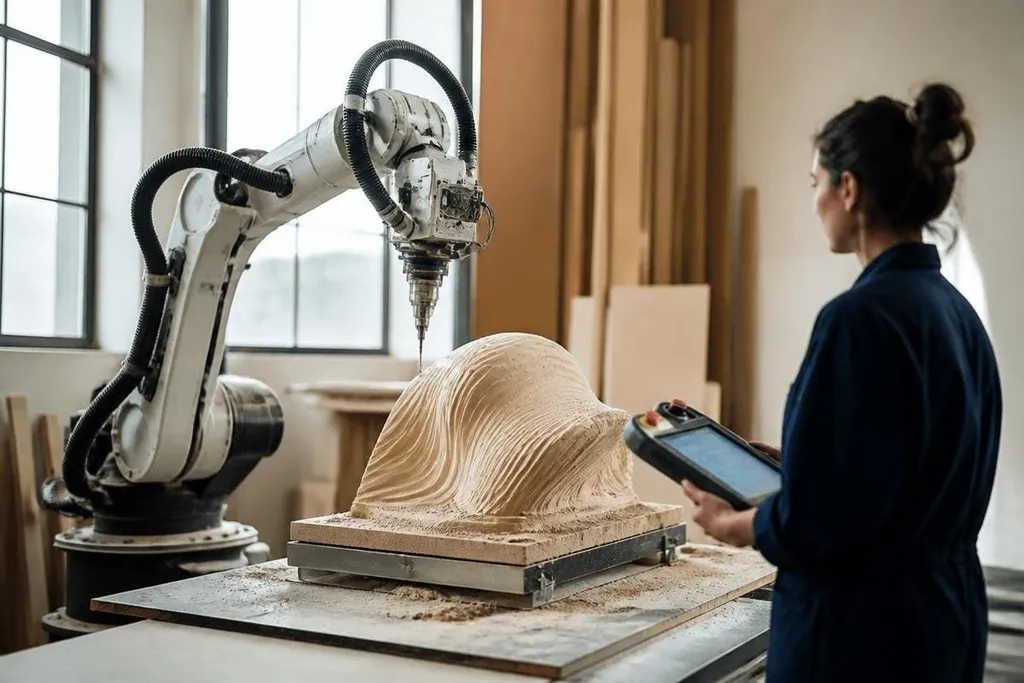
- Robot arms can turn digital designs into physical work.
- Cameras and force sensors help machines respond to objects.
- Human input still matters when tasks change from one piece to the next.
From fixed motions to changing work
A traditional industrial robot follows a programmed path. That works well for welding the same joint or moving the same part, but creative work brings variation: a new shape, a different material, or an object placed a few millimeters away from its expected position.
The first useful shift is better feedback. A camera can locate an object, while a force-torque sensor measures contact at the tool. The robot can then adjust its movement instead of following one path until the task ends.
That change matters for small production runs, custom products, and research labs. You can keep the machine busy without preparing a separate program for every minor change, though setup and testing still take time.
Software turns ideas into motion
Creative robots also depend on software that connects a design to a physical action. A digital model may describe a shape, but the robot still needs a path, a tool angle, a speed, and a safe way to reach the workpiece.
A six-axis arm can point a gripper, pen, cutter, or spray tool from many angles. ROS 2 can connect the control software, sensors, and task code, while simulation lets a team check reach and collisions before the real arm moves.
The hard part is translation. A computer image can look correct on screen while the real tool leaves gaps, presses too hard, or reaches a joint at the wrong angle. Physical tests remain necessary because materials bend, slip, and wear.
Physical tests also need a record of the tool, material, force, and failed runs. Robot24.com robotics reporting on creative systems can put those details beside a demo, so you can see where a person still guides the work. That leaves the next question: how much control stays with the human?
The human stays in the loop
Creative work changes often, so full autonomy is a poor measure by itself. Teleoperation lets a person guide the robot while software records movement data that can support later automation.
This setup suits tasks where a skilled worker knows what a good result feels like but cannot describe every hand movement in code. The person may guide the first pieces, correct mistakes, and leave routine sections to the robot.
The trade-off is clear. A human still carries much of the judgment, and the system may need many examples before it handles new materials or shapes without help.
I’d rank this shared-control model above a polished demo that hides the operator, because it shows where the machine helps and where people still do the work.
What counts as a real breakthrough
A creative robot earns attention when it changes the cost, speed, or range of a real task. A new gripper matters if it handles a material that previously needed hand work. A vision system matters if it keeps working when parts arrive in different positions.
The useful question is not whether the result looks artistic. Check the full chain: input, planning, contact, error recovery, and the finished object. A short video can show the final motion while leaving out setup, failed runs, or manual correction.
That gap matters to a studio, lab, or small manufacturer deciding where to spend money.
A robot that needs a technician beside it for every piece may still help, but its labor cost will look different from a system that runs through a batch with limited supervision.
A practical check before you buy or fund a project
Use this list when a creative robotics demo looks ready for real work:
- Name the task: write down the material, tool, object size, and allowed error.
- Check the sensor: confirm whether the robot sees position, contact, shape, or none of these.
- Watch the whole run: look for setup time, operator input, pauses, and failed attempts.
- Measure the output: inspect repeatability, surface quality, waste, and rework.
- Price the support: include programming, tooling, training, maintenance, and safety equipment.
The strongest creative robotics systems will be the ones that make changing work easier to plan and check. The next useful number is not a view count or a polished clip; it is how many finished pieces a person and a robot can produce together before the process needs correction.